Why your highest ROI Channel might be the worst place for your next £1
Facebook ads have an ROI of £2. Google Search returns £4. Should you put all your budget into Google?
Well, I’m sure the good people at Google might say yes. But if you do, you’re likely leaving money on the table.
This is the age old question of how to set your budget. There are many ways you can set budgets but here is why your budget allocation is probably wrong:
1️⃣What’s the context for those ROI numbers?
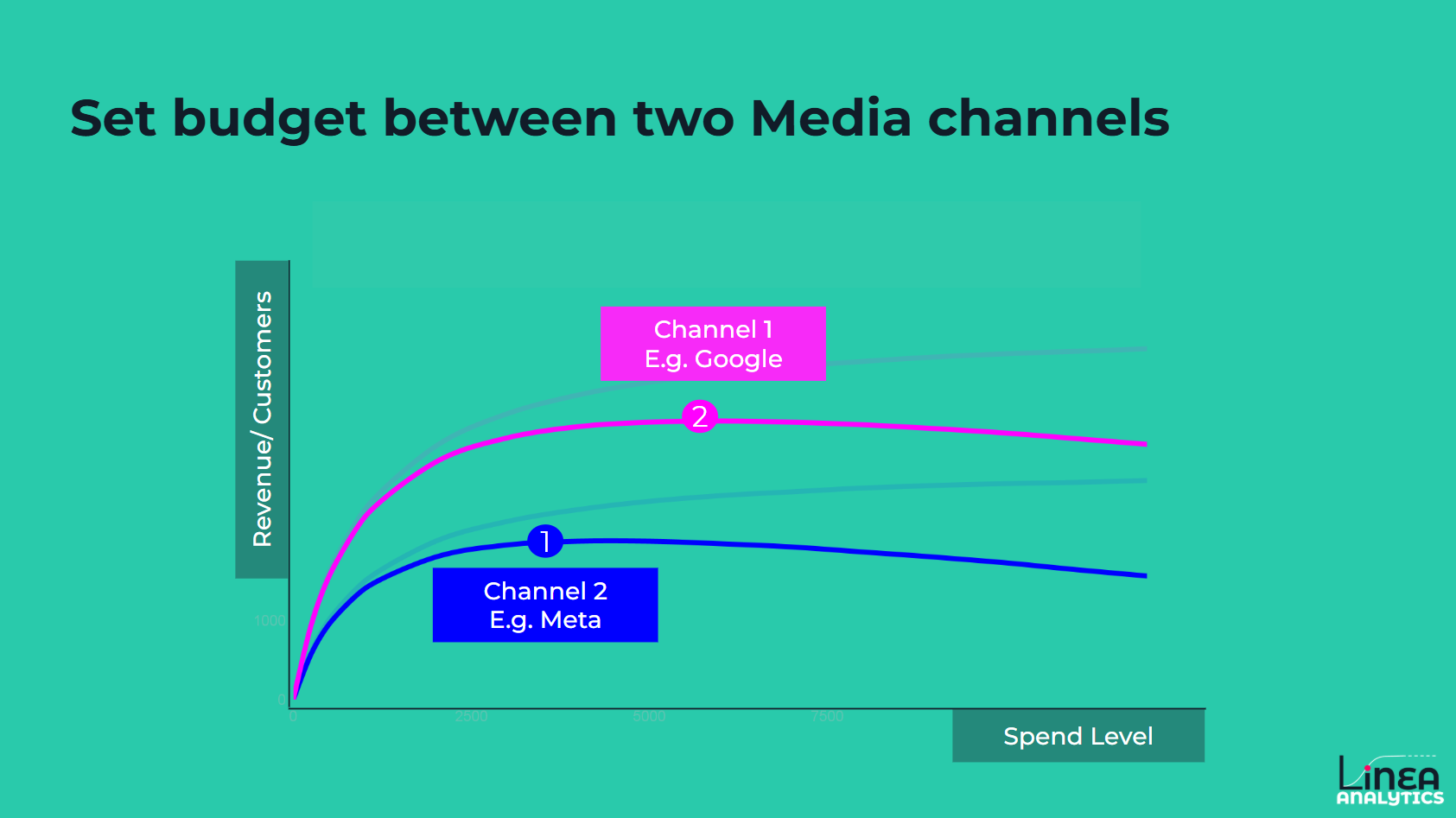
A £4 return looks great on a slide, but is that from a small test or a scaled campaign? If a channel is already at the point of saturation, throwing more money at it won't maintain that £4 return; it will just drive down your returns.
That's why we need to take into account diminishing returns. If we spend an extra £1 Brands need to know how much that would return.
2️⃣What’s your goal for the budget?
Start with your objective. Your goal will shape how you allocate.
➡️ Do you have a fixed budget?
➡️ Are you aiming to hit a set level of revenue or customer target?
Only once you have set your goal then you can allocate budgets.
A campaign focused on driving 1,000 new customers in the next month will have a very different recommended media laydown than a campaign focused on driving brand awareness.
3️⃣Allocate based on marginal ROI
This is where most marketers lose efficiency. You shouldn't allocate based on average performance, but on what the next £1 will return. It’s entirely possible that the next £1 spent on Facebook (at a £2 return) is more profitable than the next £1 on an already-saturated Google campaign that is getting worse.
4️⃣What about if things change in the future?
Are you planning new creative? Expecting Meta CPMs to rise 10% next month? If your allocation doesn't account for these factors, you aren't planning. Overlaying these important drivers helps make campaigns forward facing.
The Linea scenario tool
That’s why we built Linea’s scenario tool. Our platform allows you to run multiple "what-if" scenarios instantly, adjusting for cost inflation or creative uplift, so you can allocate budget with confidence.
That's the best way to set your budget to drive growth.