Econometric modelling for marketing in 2026
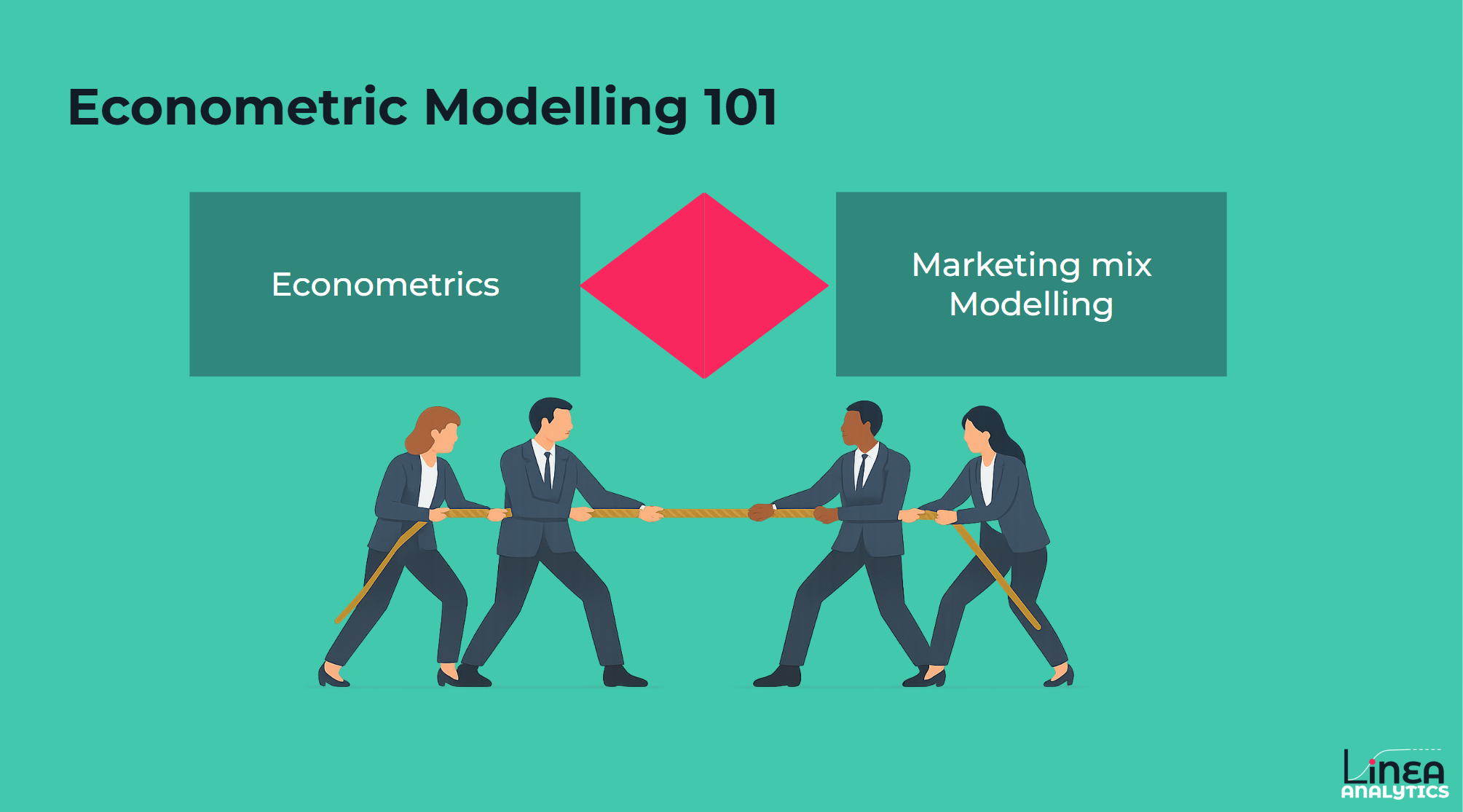
Econometrics vs. Marketing mix modelling: What's in a name?
In the world of marketing measurement, you will often hear "Econometrics" and "Marketing Mix Modelling" (MMM) used interchangeably. Essentially, they are the same thing: a statistical technique used to measure the effectiveness of various marketing channels and strategies.
While "Econometrics" is the broader academic term for using mathematics and statistics to describe economic relationships, "Marketing Mix Modelling" is the specific application of these principles to determine the contribution of marketing tactics to business outcomes.
More broadly, Econometrics is a more commonly used term within the UK market although MMM has been on the rise for many years!
What is Econometrics & how does it compare to other Measurement?
Econometrics (MMM) is a marketing measurement approach that isolates the impact of all factors driving business performance, including external variables like seasonality, economic conditions, competitor activity, and consumer trends.
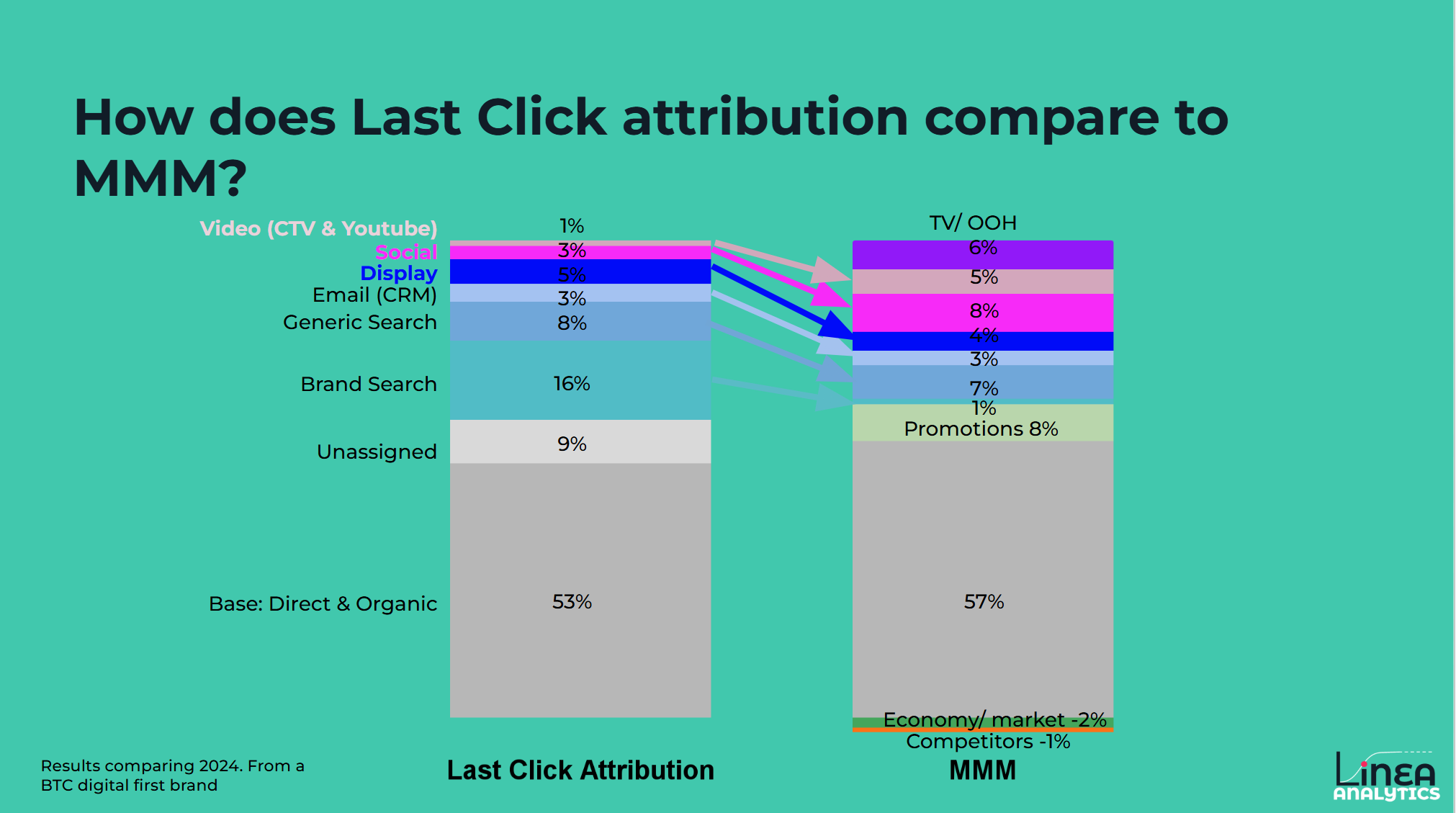
Unlike last-click attribution, which only gives credit to the channel that can be tracked and those closest to the conversion, Econometrics focuses on incrementality. It does that by controlling for all factors that may have contributed to conversion before calculating the additional impact of your media.
Lets see how Attribution and Econometrics compare:
| Last-click attribution | Econometrics (MMM) | |
|---|---|---|
| Incremental | No | Yes |
| Short term impact? | Yes | Yes |
| Long term impact? | No | Yes |
| Digital Channels measured | Yes | Yes |
| Non Digital Channels (e.g. TV, or OOH) | No | Yes |
| Like for Like Cross channel impacts | No | Yes |
| Deep dive in-channel | Yes | Subject to set-up |
| Controls for seasonality, price, promotions & external factors | No | Yes |
How does it work?
At its core, an MMM model builds a statistical relationship between dependent variables (such as sales or web visits) and independent variables (such as media spend, pricing, and economic factors).
-
Coefficient Calculation: Using techniques like Ordinary Least Squares (OLS), the model calculates "coefficients" to determine how much an increase in media spend drives an increase in sales while controlling for other factors.
-
Adstock (Memory Effect): It accounts for the fact that marketing impact isn't just felt today, but decays over time. This helps in measuring the long-term impact of brand-focused campaigns.
-
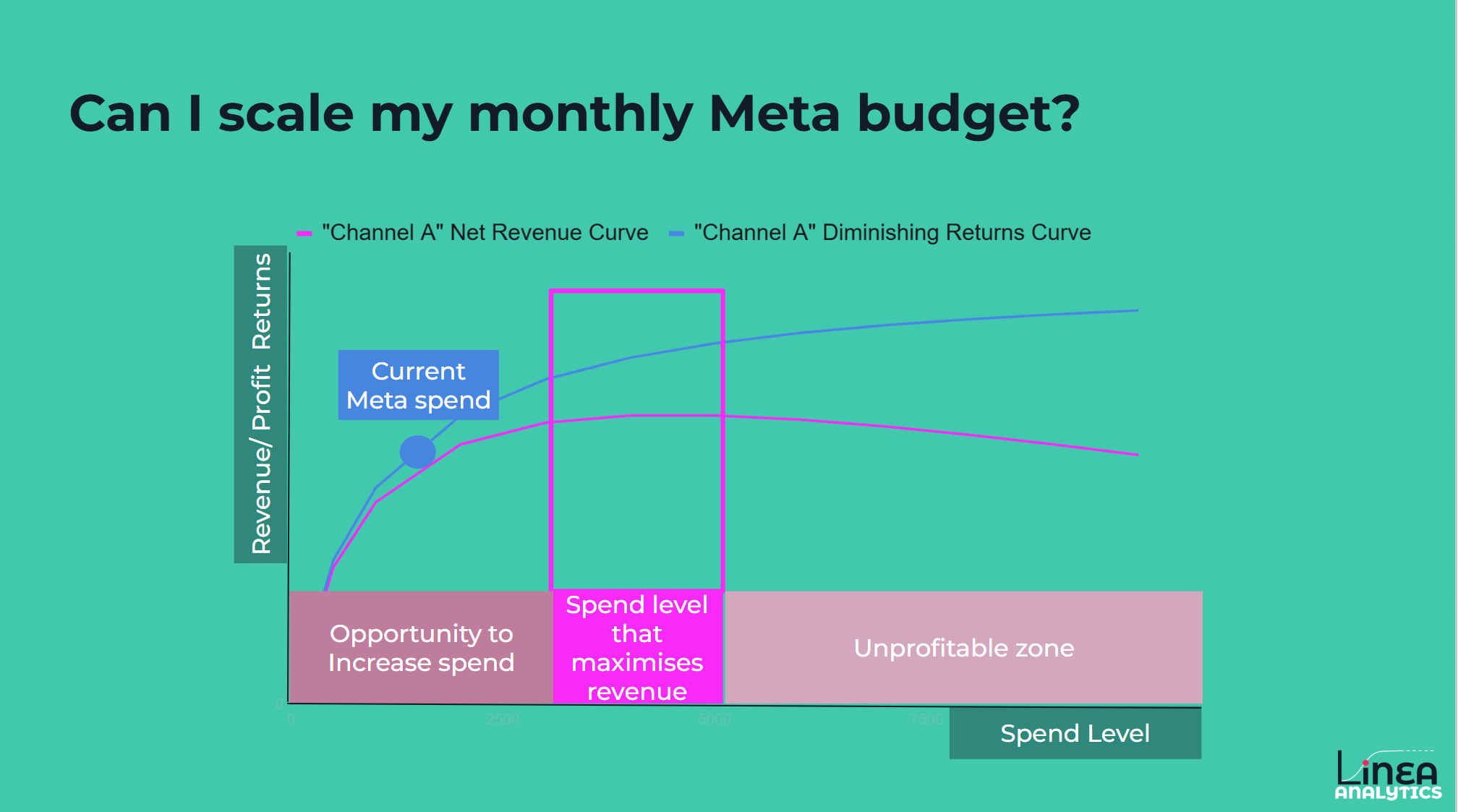
Diminishing Returns: The model calculates "diminishing returns curves" to identify the point where spending more on a channel starts delivering fewer extra returns.
You can find out more about the econometric approach and play with interactive charts to help your understanding:
What are the different econometric approaches?
Econometrics is a field used widely outside of marketing. As such methods of implementing econometrics in marketing can vary widely. Here is an overview of 3 aspects of the approach you should be aware of:
-
Whilst all econometric approaches use regression analysis the exact type of regression may differ. OLS, Ridge, Log/Linear & Bayesian are but 4 of the different regression methods. All have strengths and weaknesses with buyers should be aware of why they may be used.
-
Typically econometrics approaches use a time series approach. Requiring 2+ years of data to allow brands to understand the impact of factors such as seasonality or price changes
-
The importance of variance in your data and how to overcome multicollinearity. Without this it becomes difficult to disentangle what factors contributed to sales. A more detailed overview of this subject can be found here.
What Business Questions does it answer?
Econometric modelling provides the data needed to answer critical strategic questions:
- What is my true ROI? Identify which channels or campaigns deliver the best incremental return on investment.
- How much more can we spend on my Meta activity? (or other channels) Forecast the impact of scaling spend and identify the "unprofitable zone" where the next £1 spent returns less than £1 in revenue
- How does CAC/ CPA change during a promotion? Understand the contribution of different marketing tactics and how they interact with wider environmental factors including: the economy, seasonality or promotions.
- How do I optimise my budget? Use the Linea Scenario Tool to:
- Allocate the next pound (£) of budget to the most efficient channel for future growth
- Understand how to hit your Q2 growth targets
- Where should I spend an extra £1m budget in Q4
- Allocate a fixed budget over the year
Should I be using it to measure marketing's impact?
In 2026, the answer is a resounding yes. The move towards accurate incremental measurement for all marketing channels is becoming increasingly important.
However, the way you use it matters. Traditional, manual MMM can be slow and expensive, leading to a "slow time to action".
At Linea Analytics, we have moved beyond manual processes to deliver Always-on MMM. This modern approach to Econometrics (MMM) allows us to run faster and more frequent updates. Our approach allows for:
- Greater depth of insight: delving deeper in channels
- Speed that allows in campaign scaling or changes
- A platform that puts you in control to drive action
Importantly we ensure that measurement isn't just a retrospective report, but a strategic tool to drive future growth.
Want to find out more about Linea? Book a demo to see how you can answer your key business questions.